
A new publication titled “The Middle Bronze I Foundation of Hazor”, authored by S. Bechar and A. Yasur-Landau, was recently published in Palestine Exploration Quarterly.
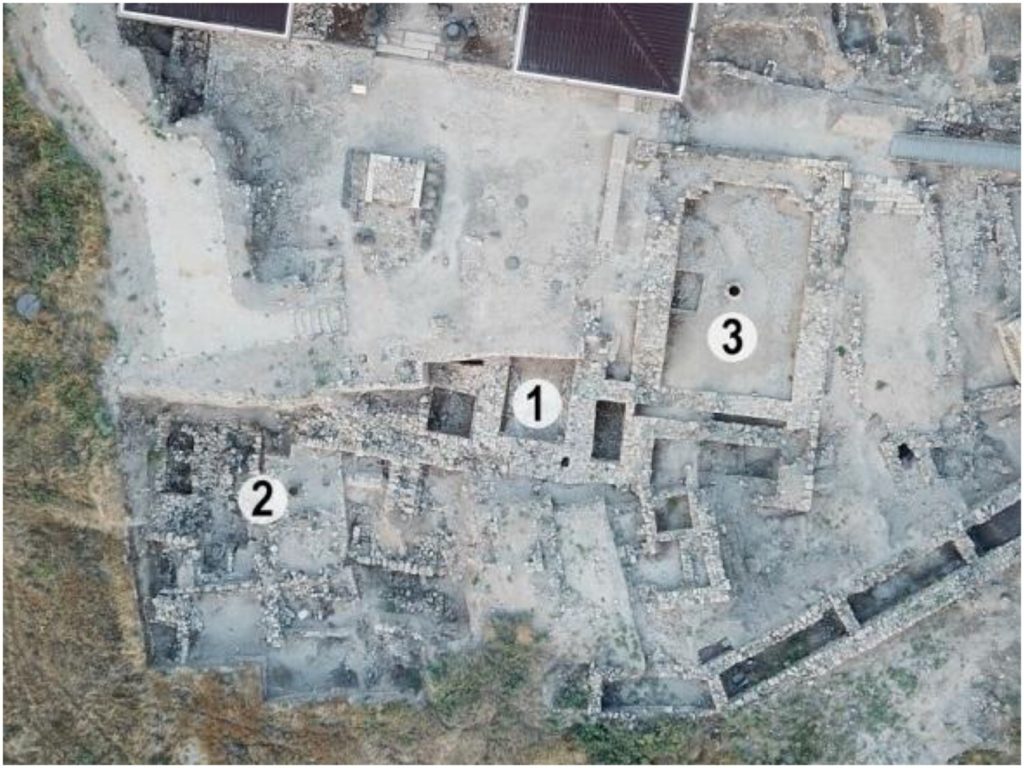
This article reexamines the chronology and urban development of Hazor during the Middle Bronze Age (MBA), on the basis of earlier excavations and publications. Traditionally, following Yadin’s and Ben-Tor’s interpretations, Hazor’s fortifications and urban expansion were attributed solely to MBII, and the preceding MBI phase was regarded as ephemeral or ‘embryonic’. However, a reassessment of the published ceramic assemblages from the Standing Stones Complex in the upper city strongly indicates that Hazor’s palace was established in middle to late MBI. This revised chronology compels a reevaluation of settlement processes in the Hula Valley, demonstrating that urbanization there began gradually in MBI rather than explosively in MBII. It also clarifies the relationship between Hazor and other regional centers, including Kabri, ‘Akko, and Dan, showing that Hazor’s trajectory of development was gradual and locally grounded rather than the product of a sudden Syrian elite incursion. This reconstruction situates Hazor within the framework of the Middle Chronology, aligning its development with the destruction of Mari (c. 1760 bce), indicating Hazor’s significant international role already in MBI. Moreover, once Hazor’s urban character in MBI is established, its mention in the Brussels Execration Texts can be accepted as reflecting the MBI geopolitical map. The evidence presented here resolves long-standing debates over chronological schemes in the southern Levant and reframes Hazor as a super-regional power whose roots reach earlier than previously assumed.
Read the full text here.